

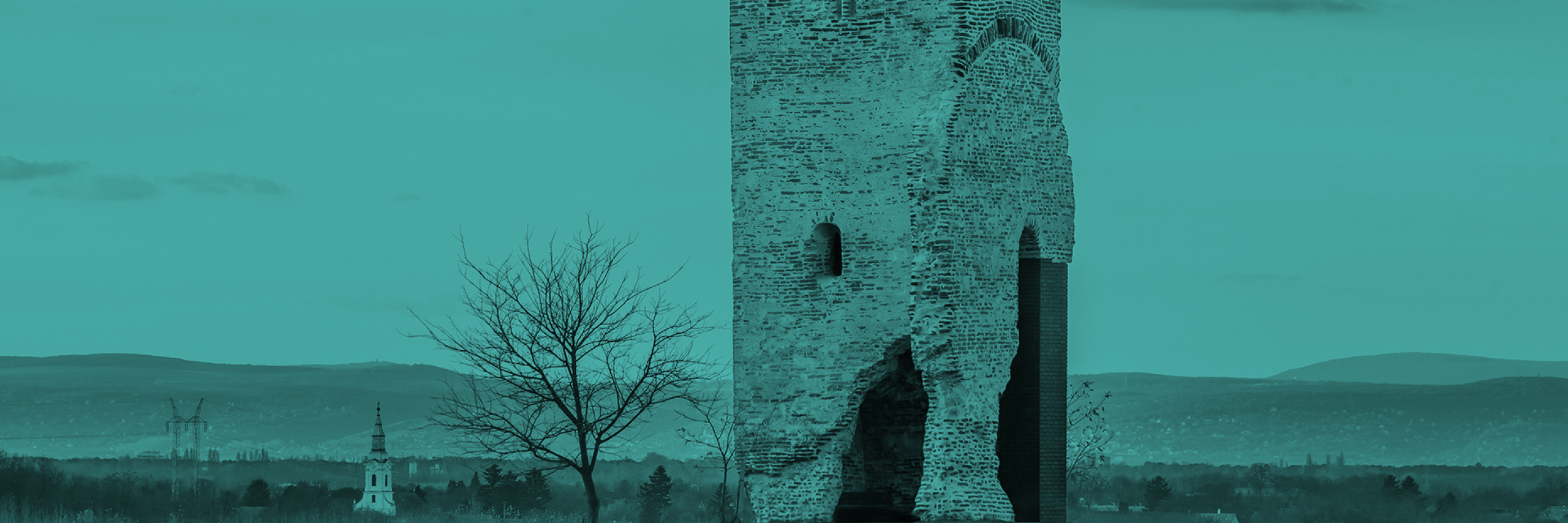
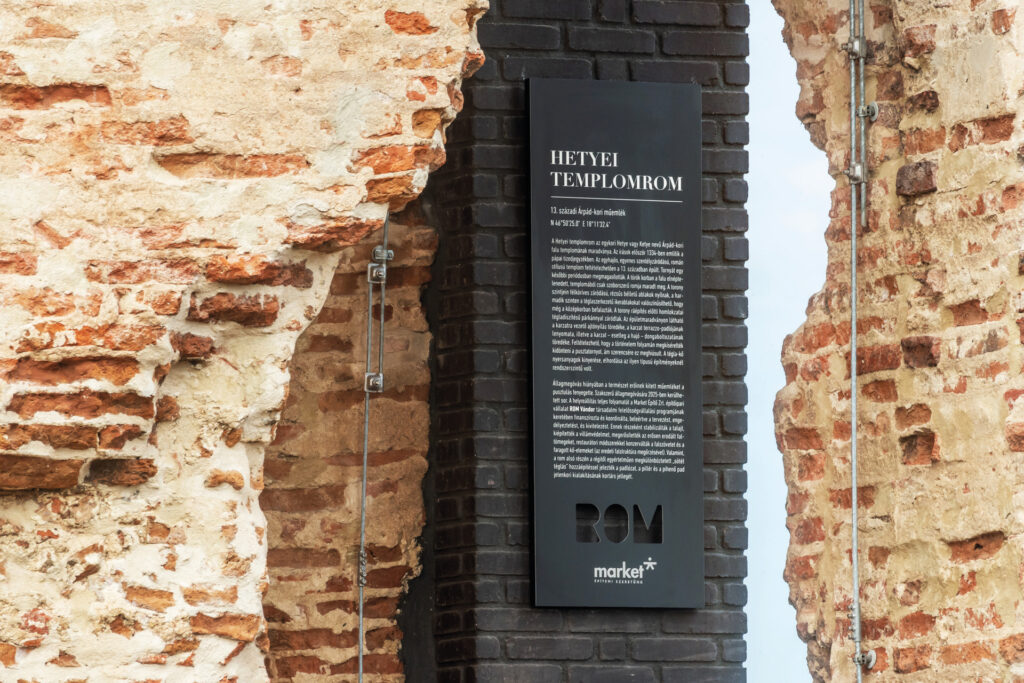
N 46°50’25.0″ E 18°11’32.4″
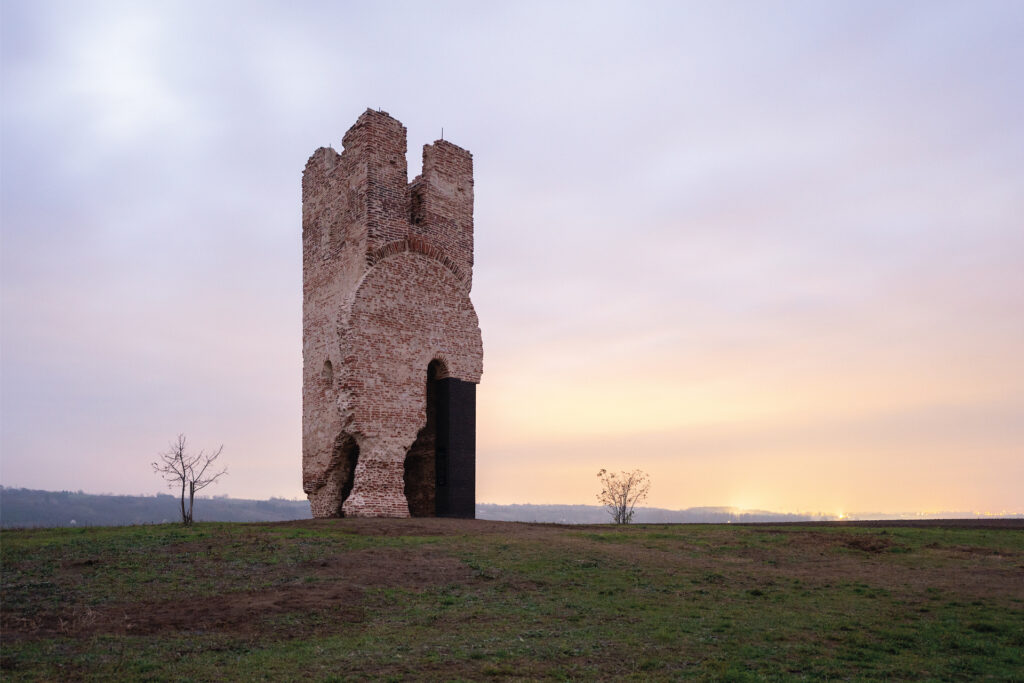
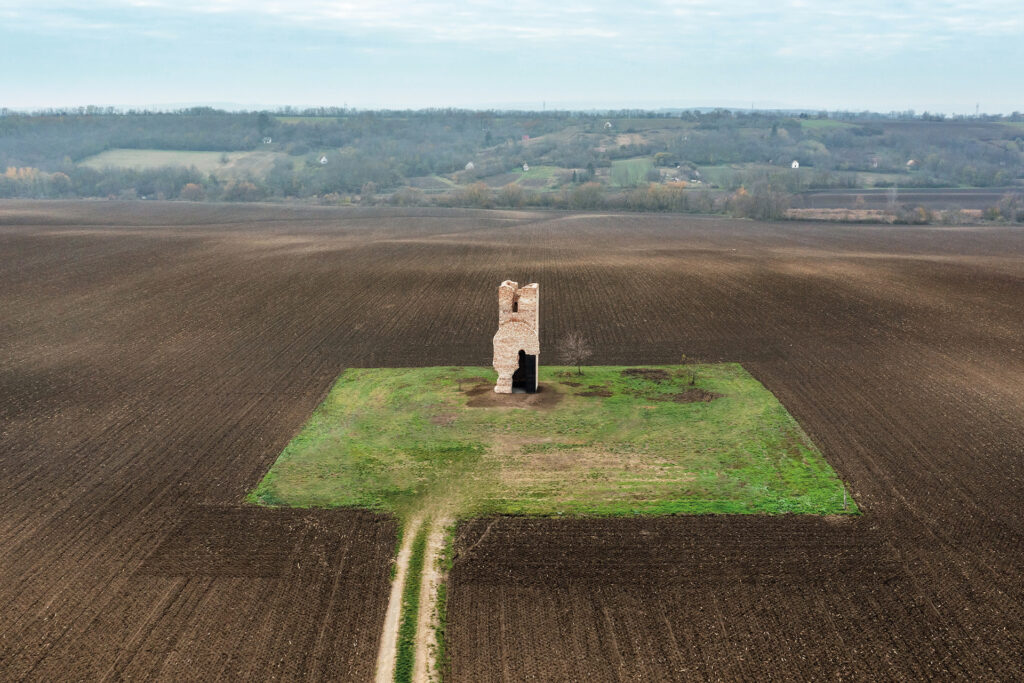
Following two years of preparatory work encompassing permit and execution processes, the sixth restored monument of the ROM Vándor (RUIN Rover) heritage conservation programme was inaugurated in the autumn of 2025: the ruins of the Hetye church, located in the outer territory of the village of Ádánd, Somogy County. This Árpád-period monument was in an extremely poor structural condition; thanks to the recent conservation works, the sculpture-like architectural remnant – often referred to as a “great survivor” – has been saved from irreversible decay.
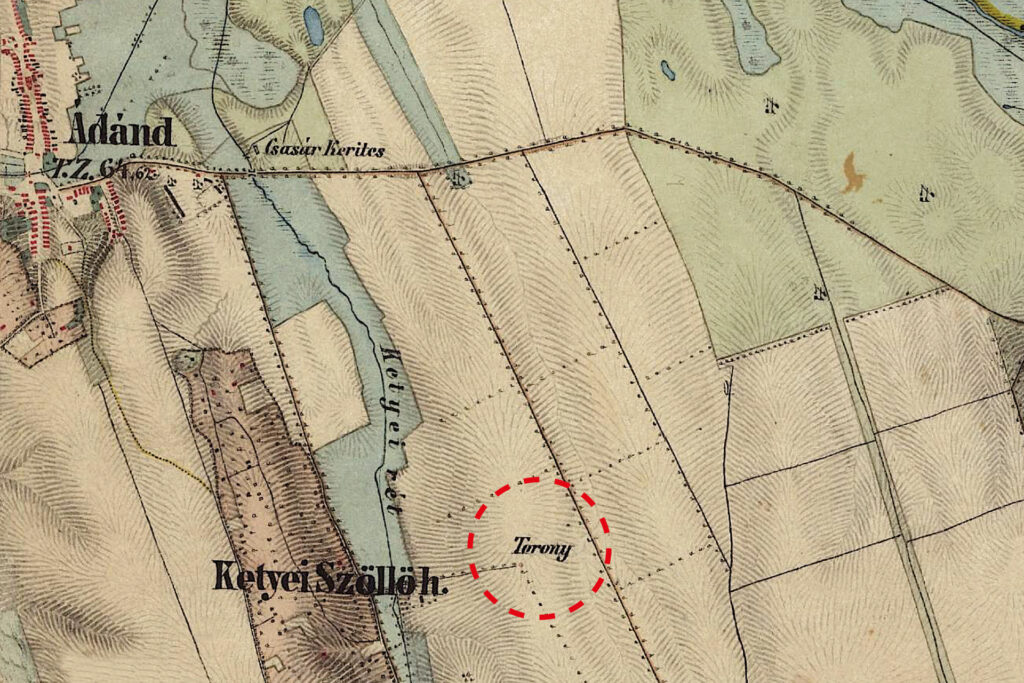
Ruin history
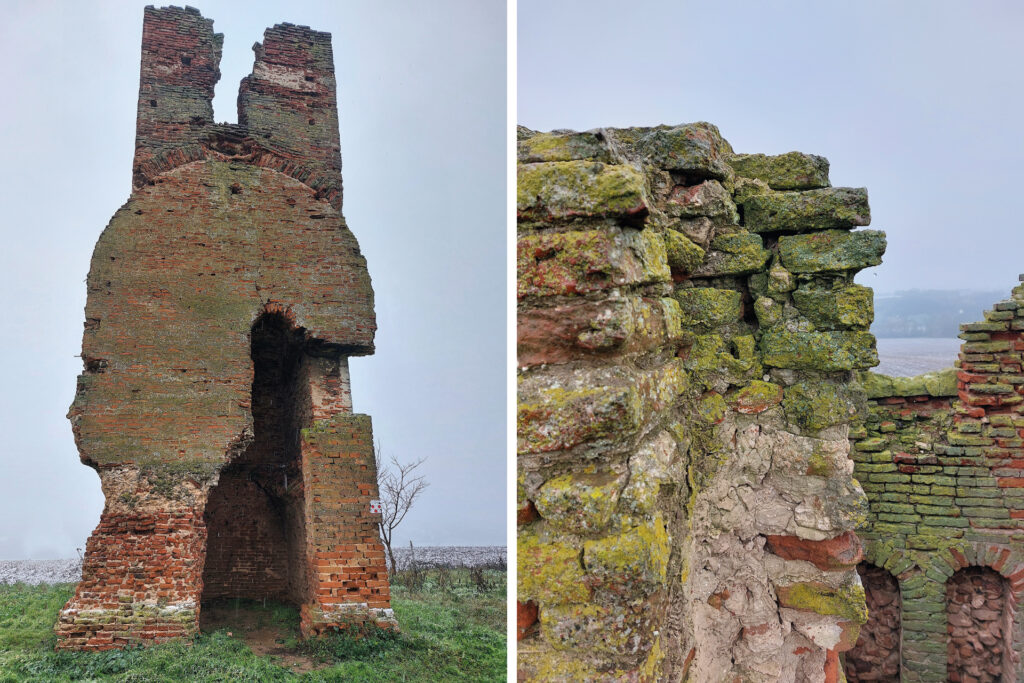
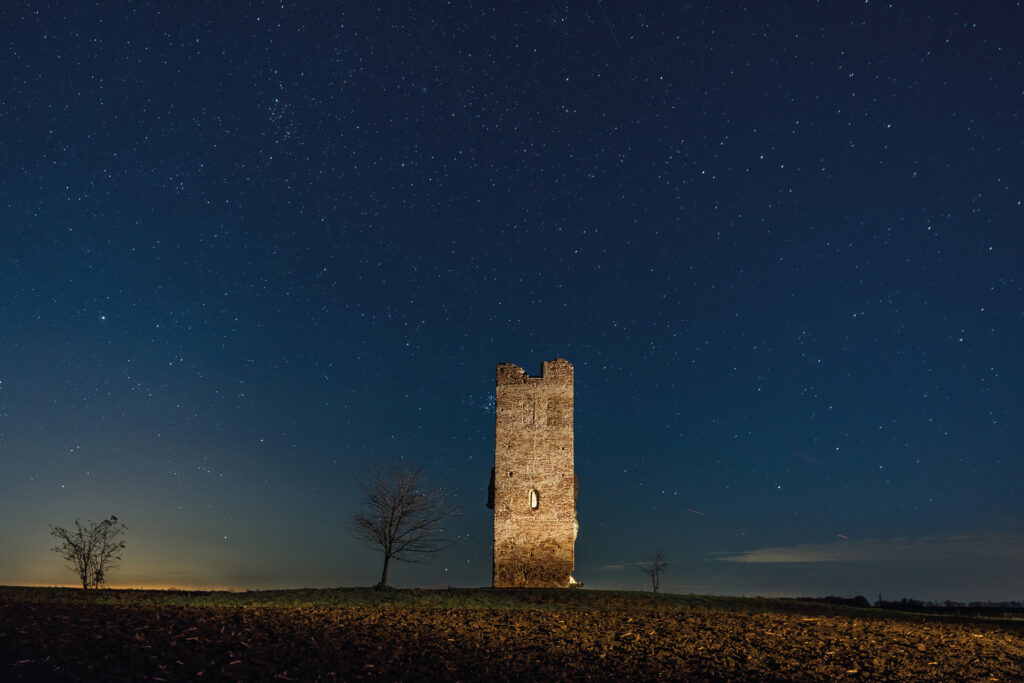
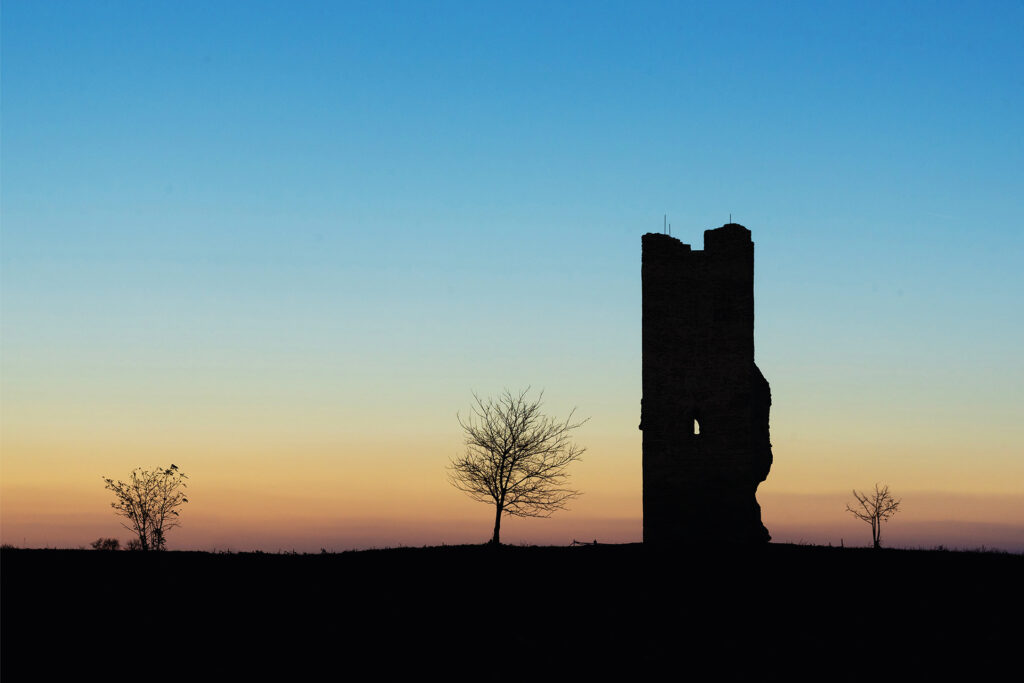
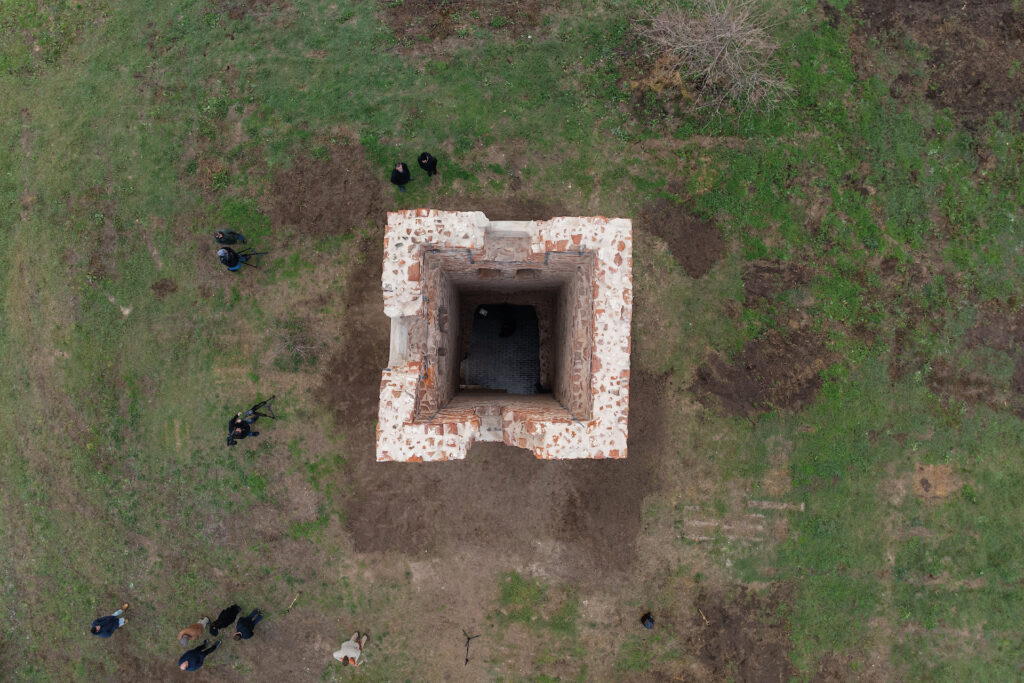
The Hetye church ruin is the remnant of the church of the former Árpád-period village known as Hetye or Ketye. It is first mentioned in written sources in 1334, in the papal tithe register. The single-nave, Romanesque church with a straight-ended sanctuary was likely constructed in the 13th century. During the Ottoman period the village became depopulated, and of the former brick-built church only its square-plan tower, approximately 11 metres in height, survived. The Romanesque tower was heightened in a later period. At its various levels, semicircular-headed windows with splayed reveals are visible; on the third level, the brick-built paired windows were presumably walled up during the Middle Ages. Prior to the later extension, the tower façades were terminated by a brick cornice. The remains preserve fragments of the opening leading to the gallery (tribune), the terrazzo imprint of the gallery floor, as well as remnants of the barrel vault of the gallery – or possibly of the nave itself.
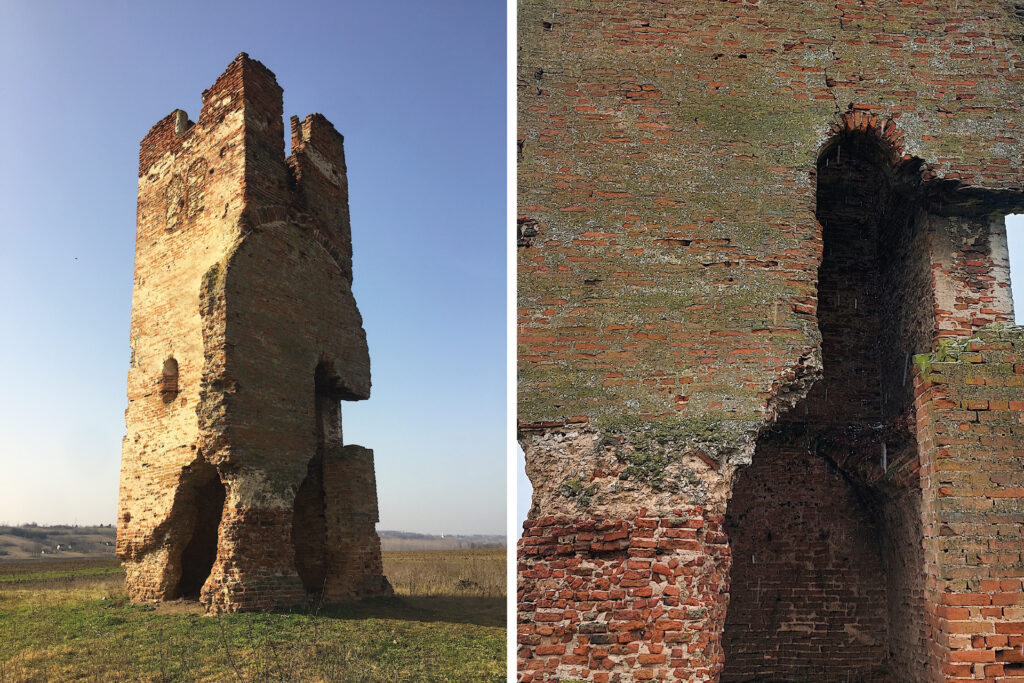
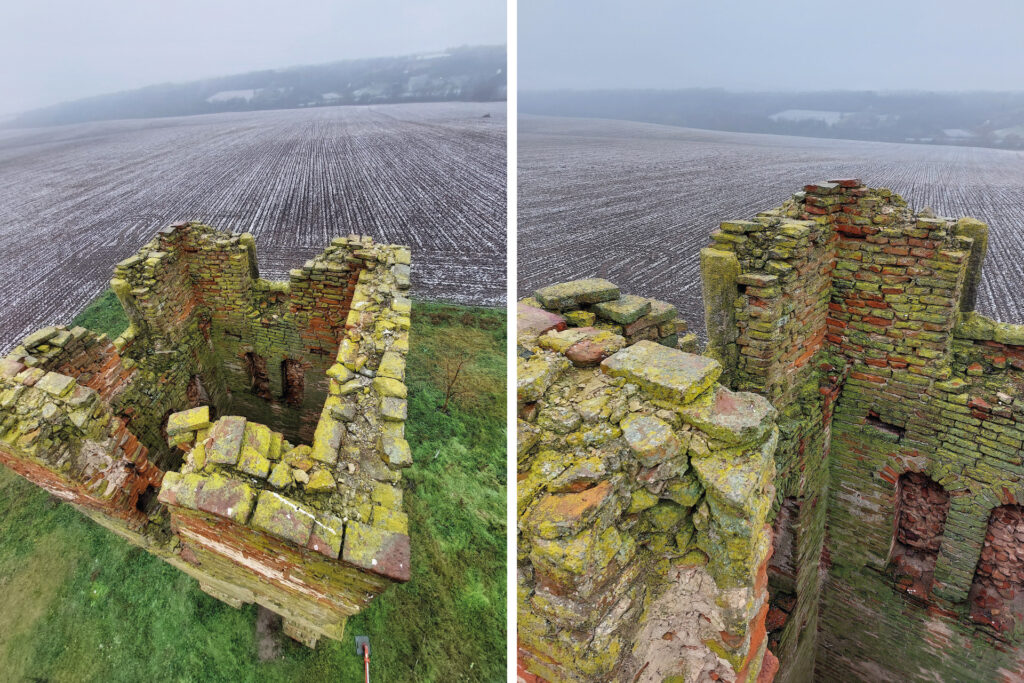
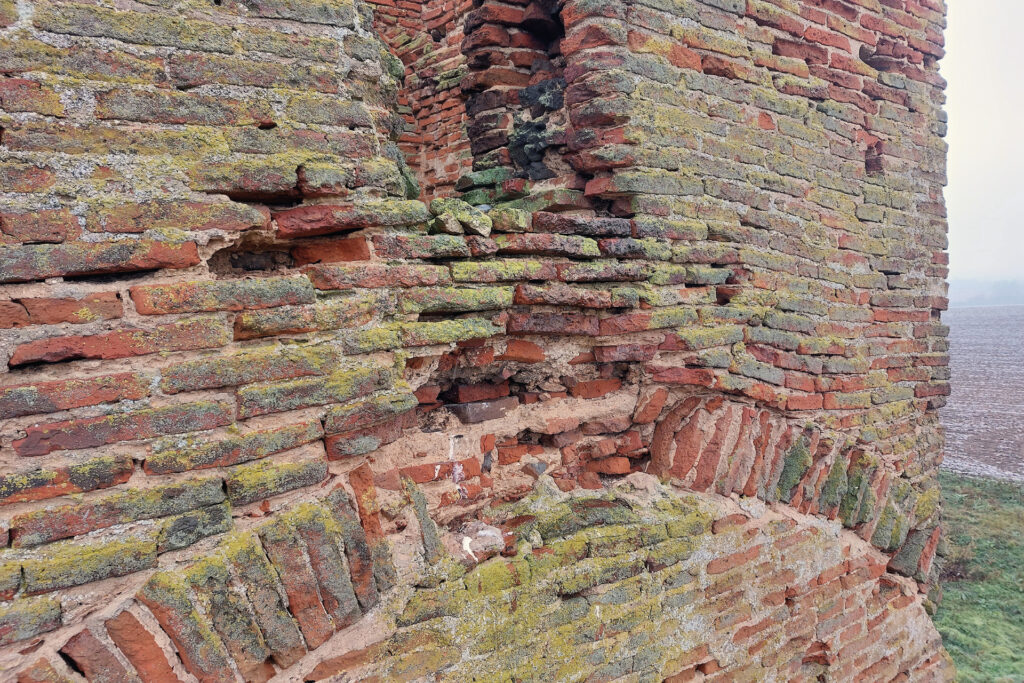
It is assumed that at some point in history attempts were made to topple the isolated tower; fortunately, these efforts failed. The extraction and removal of brick and stone building material was a systematic practice in structures of this type. This troubled piece of built heritage has nevertheless withstood the test of time, and its preservation came, quite literally, at the twenty-fourth hour.
Conservation of the Ruin
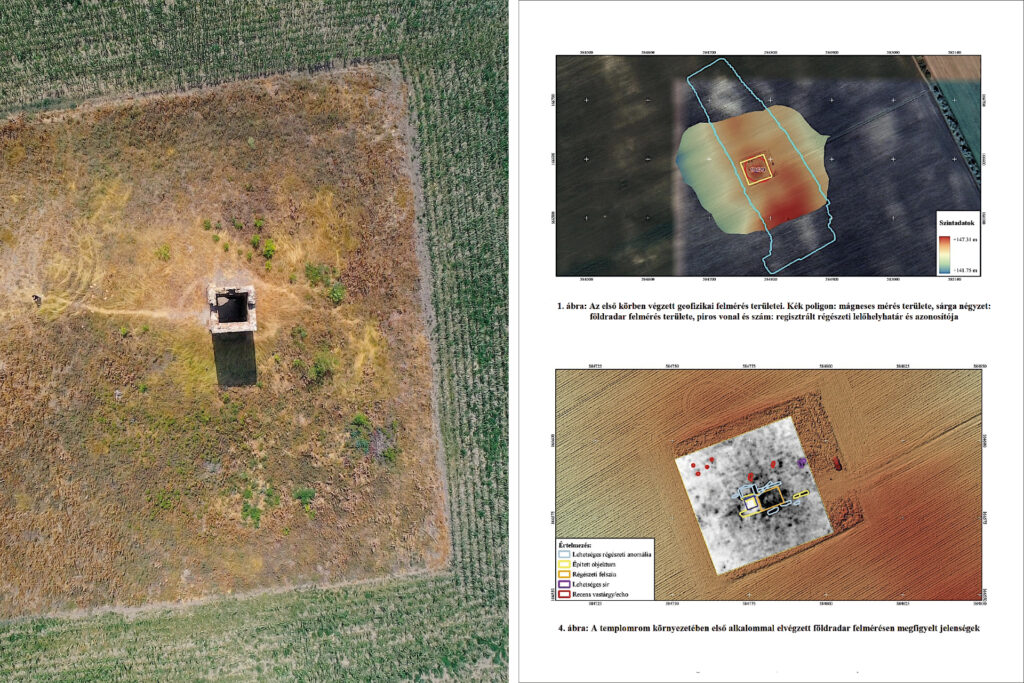
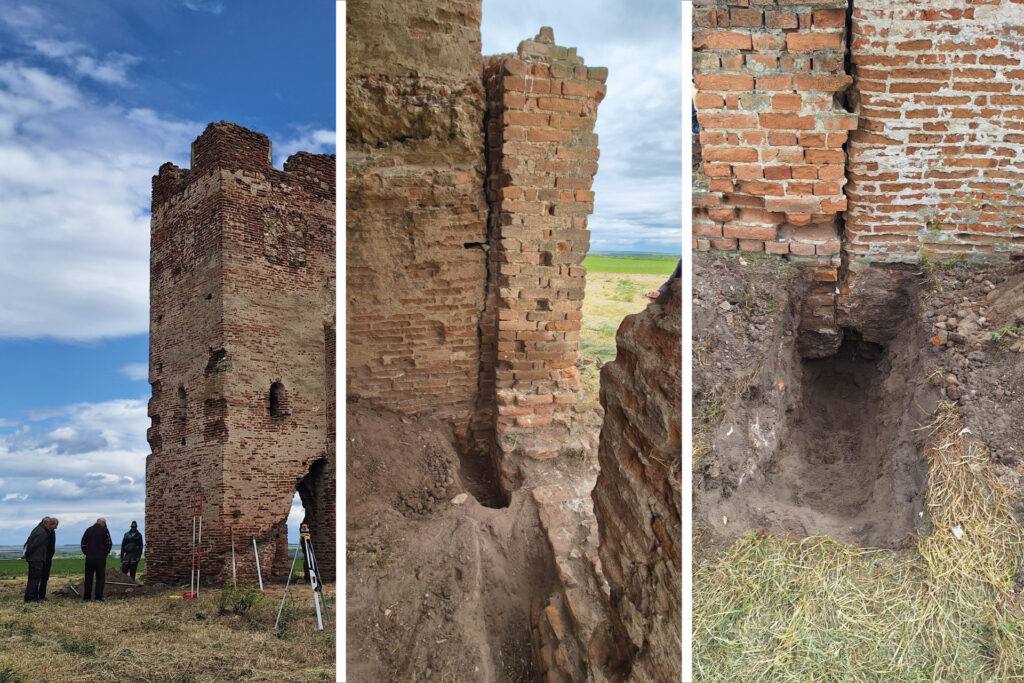
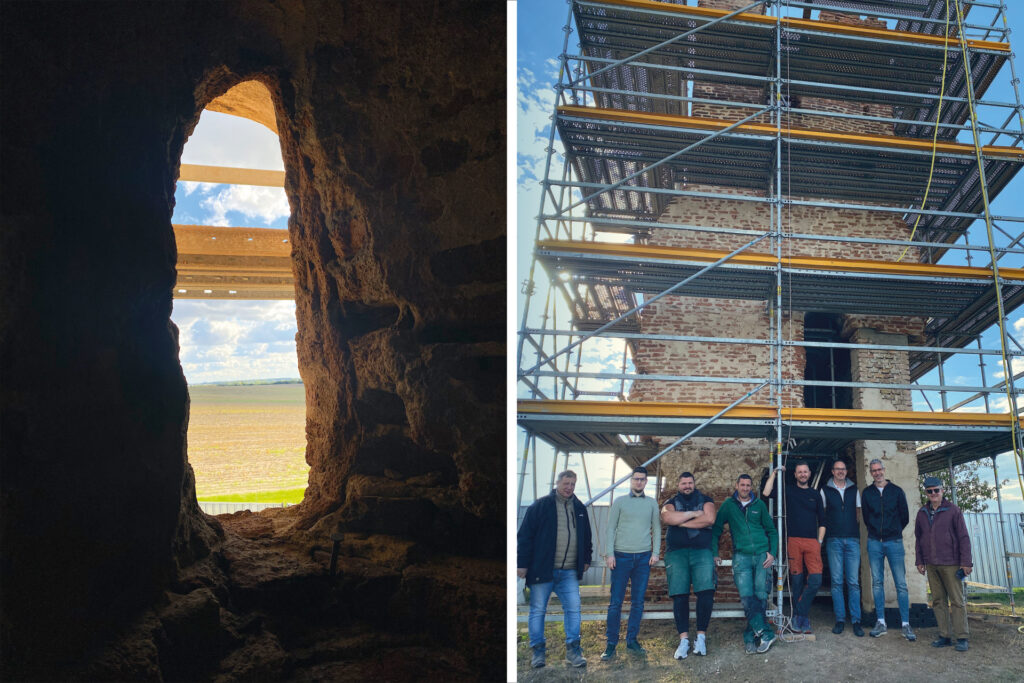
In preparation for the conservation of the Hetye church ruin, several preliminary investigations were made, all serving the thorough and professional understanding of the 800-year-old isolated tower. As part of the complex preparatory phase, the following steps were performed:
- geodetic and ground-penetrating radar surveys of the ruin site, identifying subsurface wall remains;
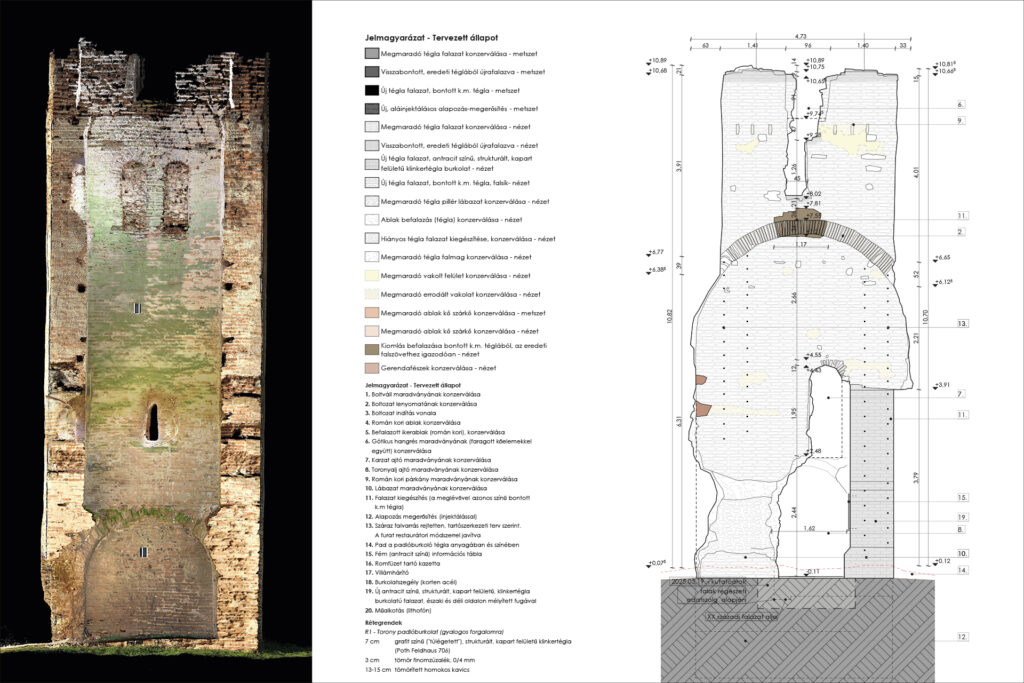
- full documentation of the internal and external masonry (3D point cloud survey, orthophotography);
- material testing of the historic bricks and mortar, including strength parameters;
- evaluation of archaeological investigations required for structural calculations;
- soil-mechanical (geotechnical) analysis of the surrounding area.
ROM Vándor
The architectural conservation concept was based on the results of these investigations. As with previous programme sites, the primary objective was the professional technical restoration of the ruin, while preserving the aesthetic and historical values inherent in the monument, as well as the poetic relationship between the ruin and its natural landscape. Particular emphasis was placed on a restrained articulation of the site’s sacral character.
A Living Monument of Faith
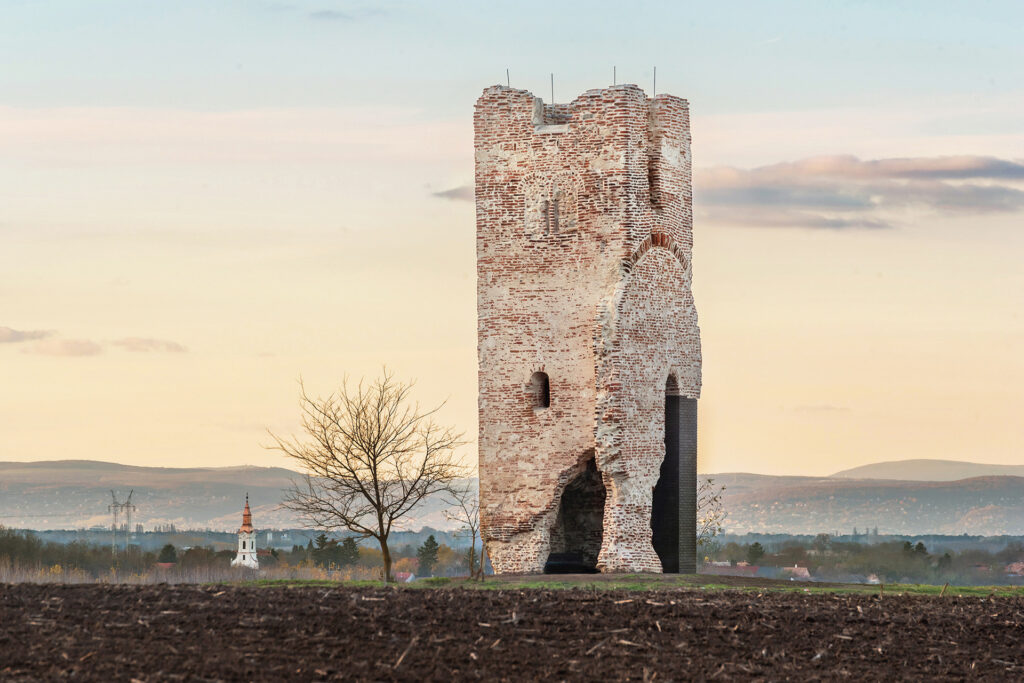
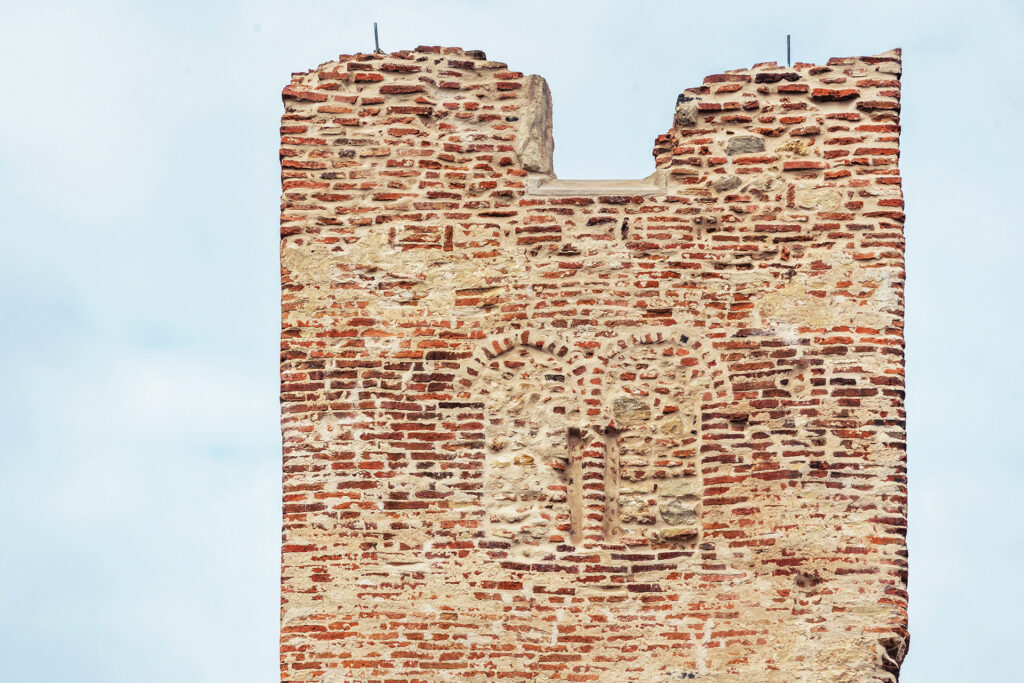
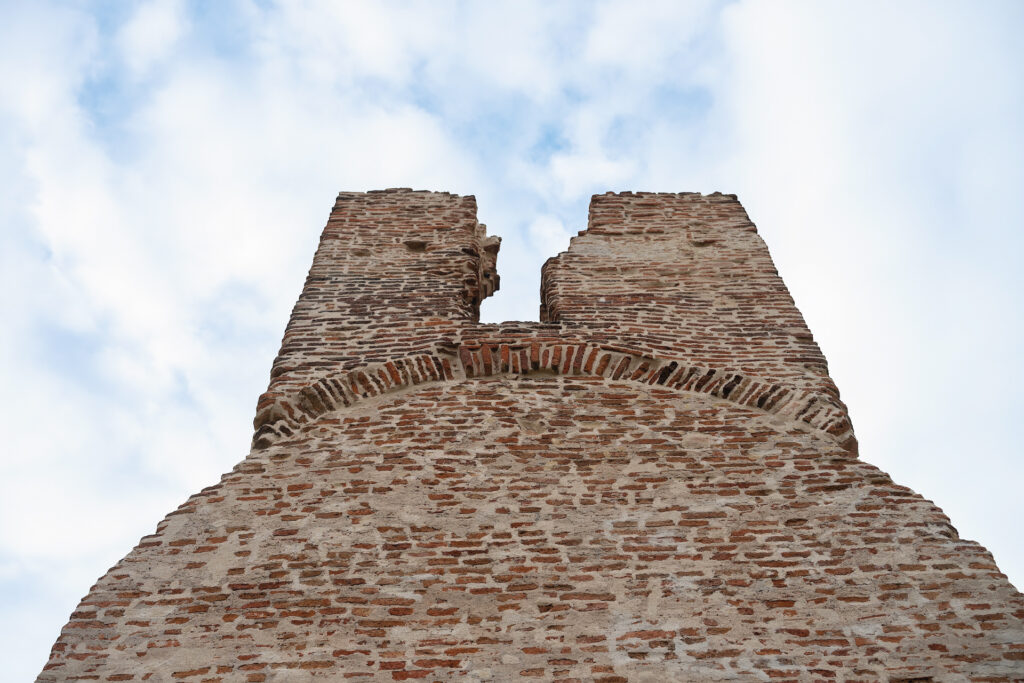
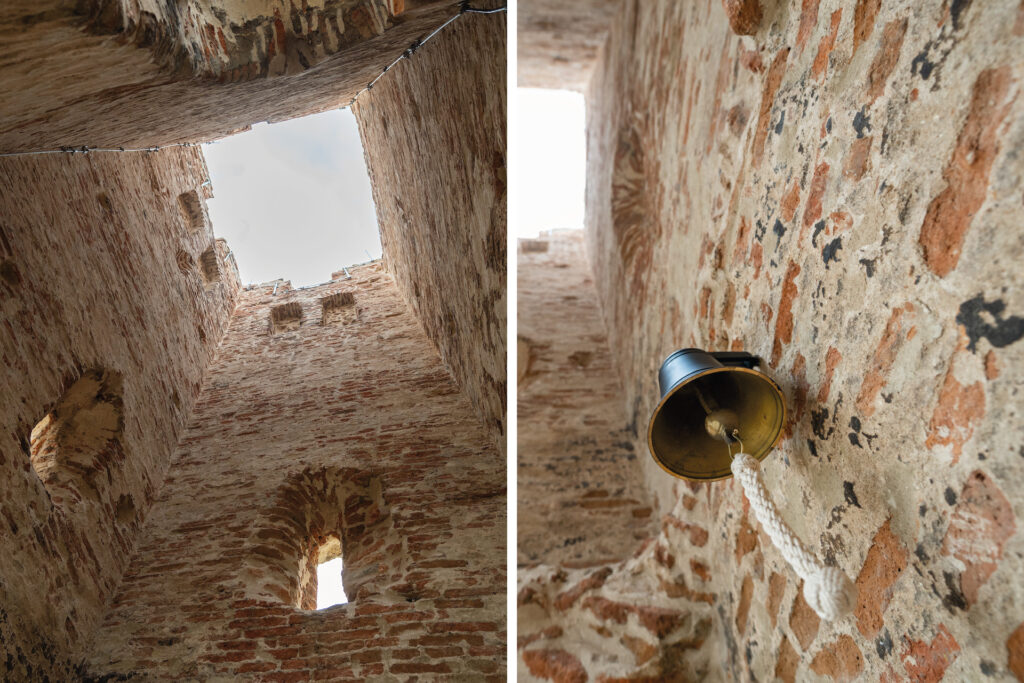
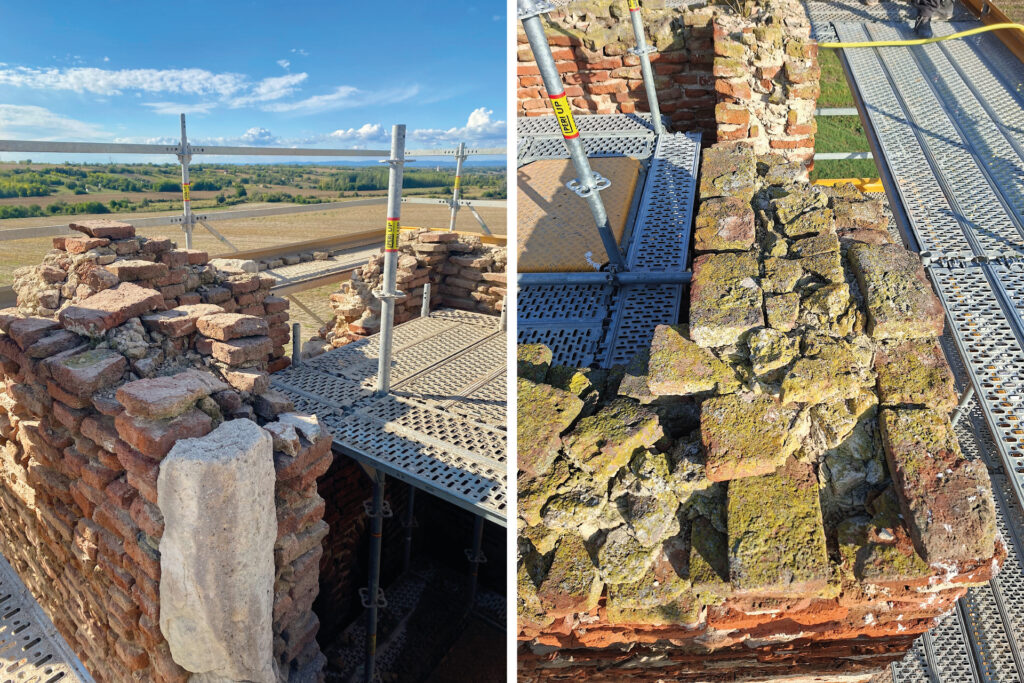
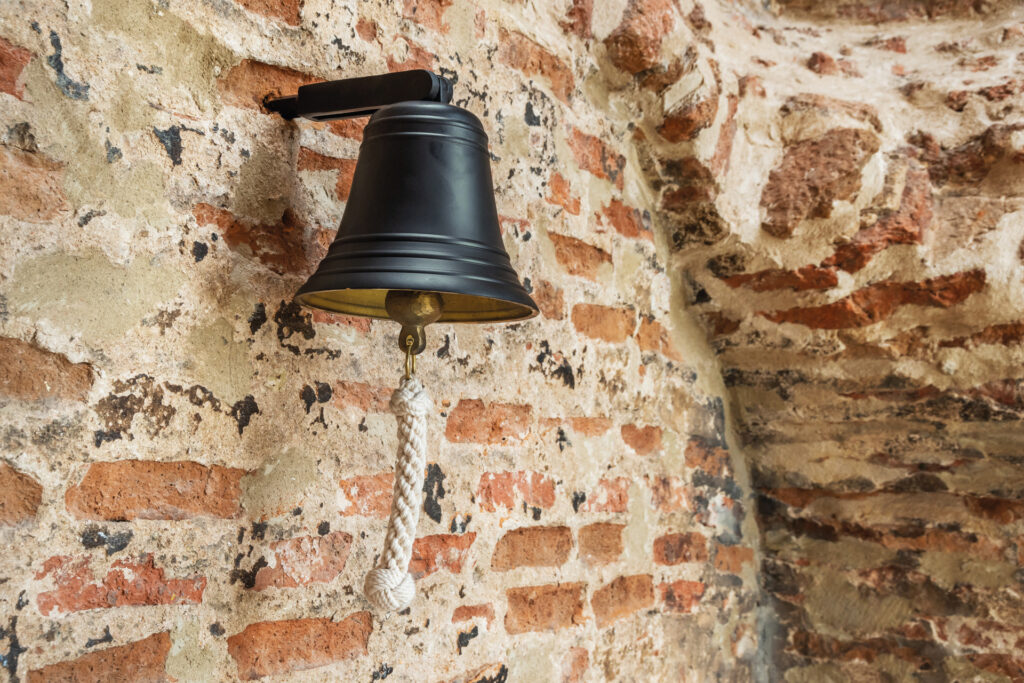
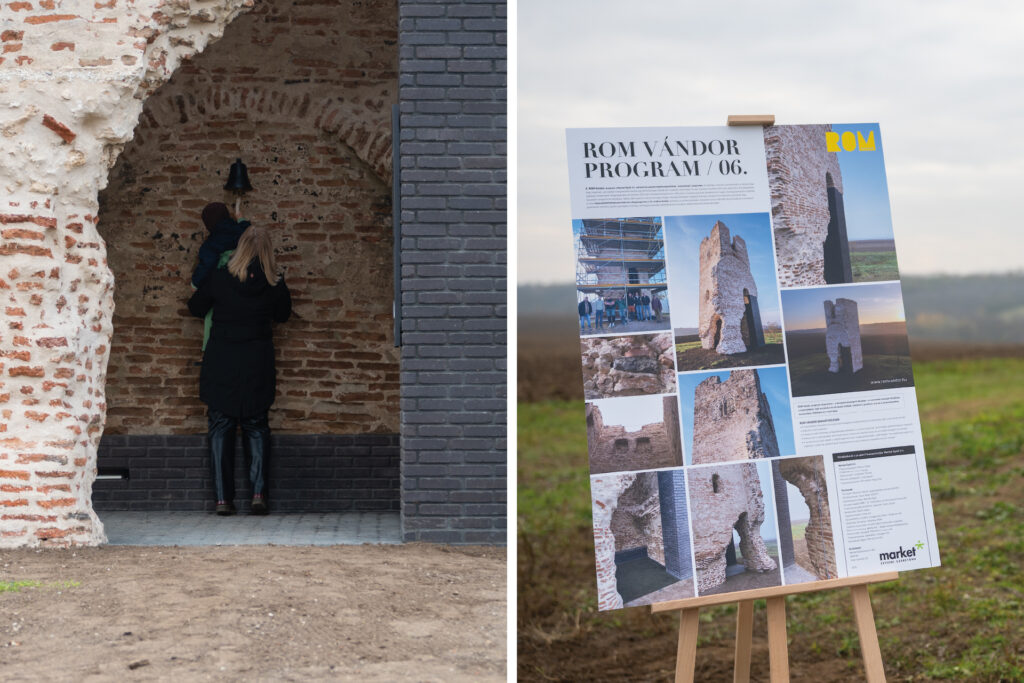
As part of the restoration, the ground was stabilised using modern technologies, lightning protection was installed, and the entirety of the eroded wall mass was structurally reinforced. Using conservation methods — and preserving the original wall structure — the masonry fabric and carved stone elements were stabilised and conserved. At the lower part of the ruin, a clearly distinguishable contemporary intervention in “dark brick” was introduced, marking the present-day construction of the floor, pillar and resting bench. A special object was also installed within the ruin: a wall-mounted hand bell, which visitors may ring at will. Through this symbolic gesture, the former bell tower has been brought back to life.
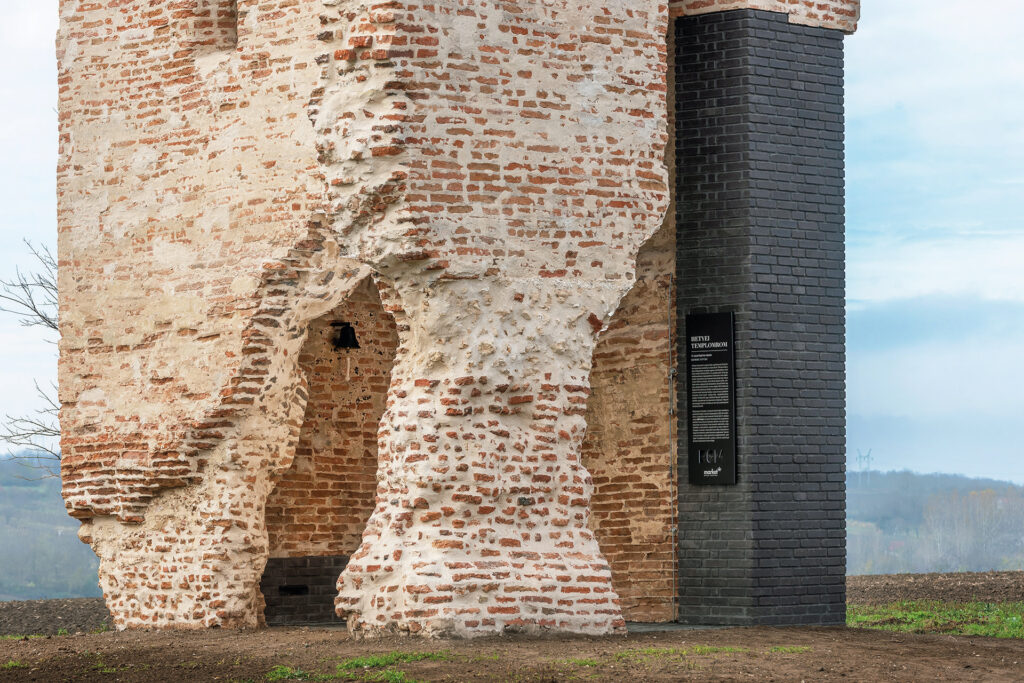
Public value, Sustainability, Heritage Protection
The aim of the ROM Vándor programme is for the rescued and restored monuments to enrich the cultural vitality of Hungary’s regions, enhancing the network of hiking and pilgrimage routes. The Ádánd site likewise offers an authentic ruin experience for those seeking quiet contemplation, as well as for inquisitive walkers and hikers.
The 2025 restoration was financed, coordinated and executed entirely by Market Építő Zrt., drawing on the comprehensive construction expertise and service portfolio of the Market Group. From research and permitting through to execution, all phases of the project were realised “in-house” and through close partnerships.
Ruin ceremony
At the inauguration ceremony, speeches were delivered by Krisztina Deák, Deputy State Secretary responsible for monument protection and cultural heritage at the Ministry of Construction and Transport; Sándor Scheer, Founder and Chief Executive Officer of Market Építő Zrt.; Szilvia Csaba, Mayor of Ádánd; and Péter Belecz, Programme Director of ROM Vándor.
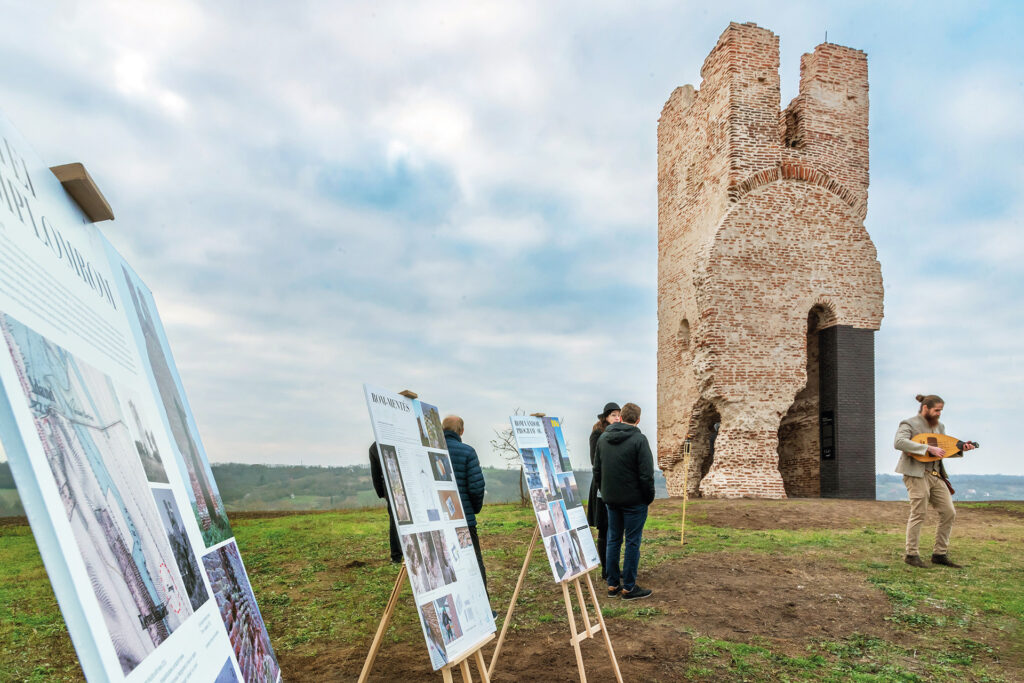
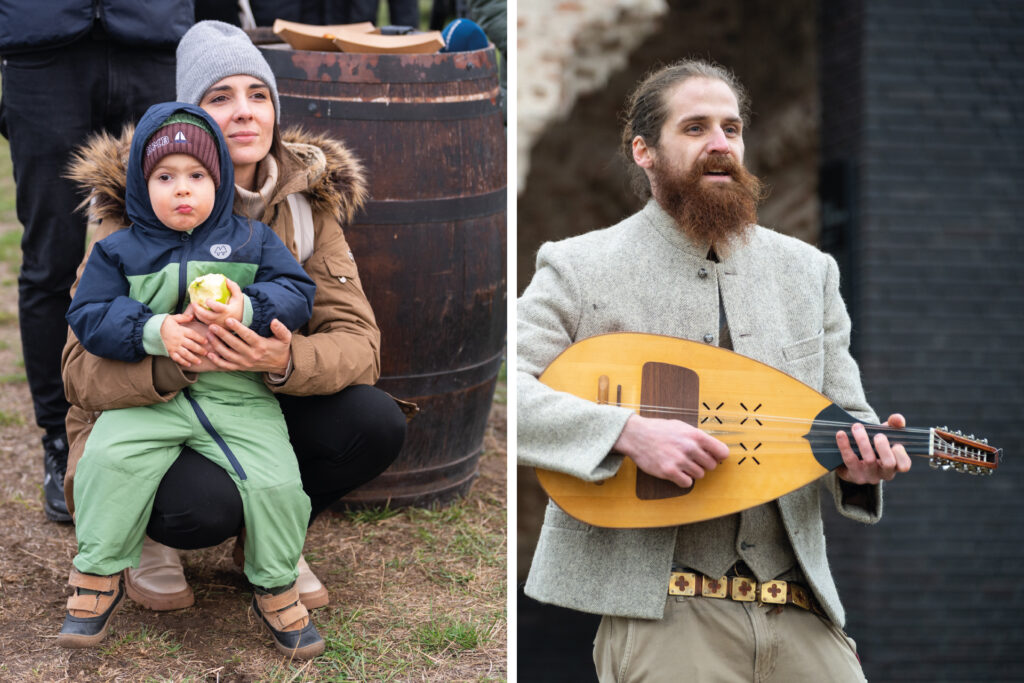
“Value creation and public service are integral to Market’s core philosophy. Through the ROM Vándor programme, we are not only saving built heritage but also preserving fragments of our national identity. The Hetye church ruin is a true “great survivor”, whose conservation required complex preparatory and construction work. I am proud that, through the expert efforts of the Market Group and its partners, this remarkable, nearly 800-year-old monument has been preserved for future generations. We believe that our renewed values serve both our shared present and our future,” said Sándor Scheer, Founder and CEO of Market Építő Zrt.
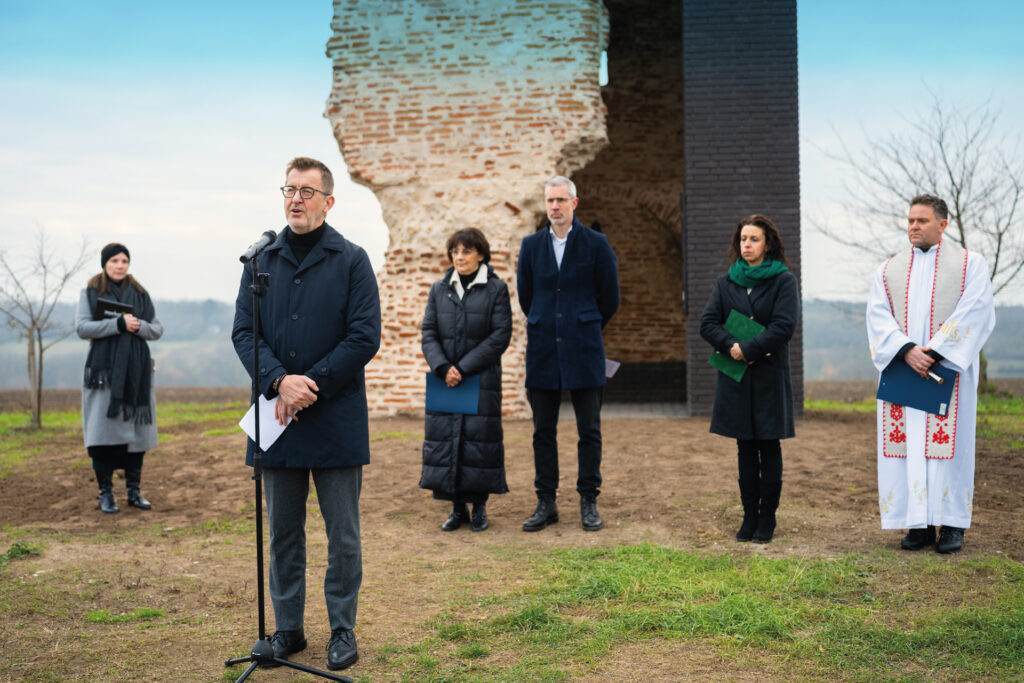
“Within the few square metres of this isolated tower lies everything that the ROM Vándor programme represents: an authentic, almost unknown, centuries-old sacral ruin. A place of extraordinary atmosphere that has endured the passage of time, yet called out for rescue. Through thorough specialist investigations, our programme team mapped the building remains brick by brick. The restored and stabilised ruin fragment was complemented with restrained contemporary elements, ensuring the dignified transmission of a timeless, universal value” – stated Péter Belecz, Programme Director of ROM Vándor.
ROM Vándor 06. / ÁDÁND
Main contractor, 100% financier and coordinator of the project: Market Építő Zrt.
Programme director: Péter Belecz
Project manager: Tamás Krenn
Site manager: Tamás Szabadosi
Technical estimation engineer: Ágnes Jung
Head of Sponsorship and CSR: Edit Nagy
Partners
Design: Bálint Kelemen, Lead architect designer (KÖZTI)
Structural engineer: Péter Váczi (KÖZTI)
Building diagnostics: Egon Baratta
Material analysis: BME / dr. Ákos Török Ákos and Fenyvesi és Társa Kft.
Scientific documentation, archaeology: László Gere
Restorer: Gábor Bánfi
Soil mechanics: Petik Kft.
3D point cloud, orthophoto: Kvalitron Kft.
Geophysical survey: Máté Stibrányi
Professional consultant: Ádám Arnóth (monument expert)
Historic mortar, Steel Dry technology: MAPEI Kft.
Soil stabilisation: Csillagtér Kft.
Execution / Market Group
Market Épületszervíz Kft.
OKM Kft.
Vilati Szerelő Zrt.
Unmarked photos: ROM Vándor project team